Showing posts with label advanced level. Show all posts

19 September 2024

The minus sign

First new entry in more than 8 years! 

Recently, I discovered an important difference between using a hyphen (-) and a minus sign (−) in reports. 

When using a hyphen to indicate a negative number (e.g. because you have copied and pasted a negative number from Excel, and it automatically pastes as a hyphen), and the number is long so it crosses onto the next line of text, the hyphen can be left behind (i.e. the line break can be between the hyphen and the number).

Here is a recent example. The text describes a decrease in emissions that leads to a negative emission, −256,000 tCO₂eq/year. However, in the top text, the hyphen (used here to indicate a negative number) has separated from the rest of the number, and it is easy to misinterpret the text as saying the new figure for emissions is 256,000 tCO₂eq/year. In the lower text, the minus sign has been used, and it automatically carries onto the next line.


In conclusion, it is best to use a minus sign (which can be accessed in Microsoft Word through the insert-symbol function) to indicate negative number, rather than a hyphen. Not only because it is correct and more visually pleasing, but also because it keeps the sign and the number together when there is an automatic line break.

04 April 2016

already

In English, "already" is only used in reference to another situation.

For example:

"Don't forget to do your homework!"
"I've already done my homework!"

"Can you help me with this thing before you go to work?"
"No, I'm already late!"


It is typically not used in general situations like:

 
"Pencils were in use as early as the 16th century."

"Only small amount of toothpaste is needed to clean your teeth." 

Origin of the confusion:
Generally, the German "schon" means "already" in English. However, there are several exceptions.

In German, "schon" is sometimes used instead of "bereits", e.g. "Schon gestern habe ich einen Teller zerstört!", which is in reference to an event today. In English, this would simply be "I dropped a plate yesterday too!" 
In German, "schon" and "only" can sometimes have the same meaning, e.g. "schon kleine Mengen reichen aus".

24 June 2015

state of the art

There is some confusion about this term. My advice is:


don't use this term!


Meaning 1:

To an estimated 99% of native English speakers, a "state-of-the-art technology" means a new, cool technology. It used to be a very common term in advertising. 

In this situation, use "cutting-edge technology" instead.


Meaning 2:

To patent lawyers, and ONLY IN THE CONTEXT OF PATENT LAW, a "state-of-the-art technology" means a technology that is in wide use and is not patentable because it is not novel. 

In this situation, use "standard technology", "current technology", "commonly used technology" or "widely used technology".


Here's some background information.


Origin of the confusion:

In German, "Stand der Technik" means standard, widely used technology, like in the English patent law sense. You will see "state of the art" misused to mean this by native German speakers on a regular basis. But it is still wrong. Outside of German-speaking countries and patent law, this term means "cutting edge". So just avoid it.

11 February 2015

The en dash

This is for the real experts! Most native English speakers don't know this.

The en dash () is a symbol you can't find on most keyboards. It is longer than the hyphen (-) and shorter than the em dash (). It is called en dash because it is as wide as a capital en (N).

The en dash is used to indicate a range of numbers, e.g. 70–80 g/L.

The en dash is also used to contrast two words, like solid–liquid separation, the gas–liquid interface and the London–Paris flight.

Note that compound adjectives like liquid-soap dispenser or small-scale fermentation, where the first adjective modifies the second adjective (i.e. the soap is liquid and the scale is small), are written with a normal hyphen (see previous article).
 

More information on this sexy punctuation can be found here.


Verbs

This post is about the over-use of verb nouns.

By verb nouns I mean things like: 
- reduction, optimisation, calibration, etc.

where the verbs are: 
- reduce, optimise, calibrate, etc.

Try to use verbs instead of verb nouns where possible.

Don't say:

An optimisation of the fermentation was performed.

Instead say:

The fermentation was optimised.


Although it is not grammatically incorrect to use verb nouns, the text becomes difficult to read when it contains a lot of these words. This is even worse when the sentence is very long and the verb is at the end (see previous post). If you are trying to explain something complex, you your text should be easy to read! 

Take the following example: 

A reduction of H2S content in the produced biogas of up to 78% in the methanogenic stage of the two-stage process was achieved.... This indicates a release of the formed H2S mainly during the first step... As shown in Figure 2, complete H2S removal was achieved with the acidic biofiltration unit established at inlet concentrations below 6363 ppm H2S. 

Better:

The H2S content of the biogas was reduced by up to 78% in the methanogenic stage of the two-stage process.... This indicates that the H2S was mainly released during the first step... As shown in Figure 2, the acidic biofiltration unit completely removed H2S from the inlet gas when the concentration was below 6363 ppm H2S.


Here, I replaced "a reduction" with "was reduced" and "a release" with "was released" and "removal" with "removed".

06 October 2014

Commas in English

Commas are complicated! Here are a few rules. One general piece of advice: if you have a lot of commas in a sentence, consider dividing it into two (or more) sentences or changing the word order.


Commas as brackets

Commas can be used in place of brackets. Make sure that the sentence isn't too long and that it is clear which part of the sentence is in comma brackets. 

My friend Li, who comes from China, doesn't have any brothers or sisters.


Tip: If the sentence is long with a lot of commas, consider using real brackets, e.g. 

My friend Li (who comes from China) doesn't have any brothers or sisters.


Commas to separate introductions

Commas should be used to separate the introductory element from the rest of the sentence.
In 2014, elections for the European Parliament took place.
In general, you should go to the airport one hour before your flight.
However, ...
For example, ...

This is also true if the words come in the middle of the sentence:

You can, of course, go to the airport two hours before your flight.
I would recommend, however, that you only go one hour before.

Tip: If the sentence is long with a lot of commas, consider putting this information at the end of the sentence, e.g. 

Elections for the European Parliament took place in 2014.


Commas when adverbial or subordinate clauses come first

I call these "flipped sentences". In this kind of sentence, the "because", "as", "due to", "owing to", "although", "if", etc. comes first.

Because animals were not allowed in the student dorms, I had to give away my hamster to a friend.
Although I learnt to play the piano when I was younger, I don't think I would be able to read music now.


Tip: If the sentence is long with a lot of commas, consider flipping the sentence and removing the commas e.g. 

I had to give away my hamster to a friend because animals were not allowed in the student dorms."


Examples of sentences with a lot of commas:

Owing to the one-child policy, my friend Li, who comes from China, doesn't have any brothers or sisters.

Here it would be better to remove one set of commas:

My friend Li, who comes from China, doesn't have any brothers or sisters owing to the one-child policy.
Owing to the one-child policy, my Chinese friend Li doesn't have any brothers or sisters.


Extra advice for native German speakers:

30 September 2014

which or that

This one is quite difficult to explain. I don't know the rule, but this is how I do it:

If the information after the which/that is essential information, then use "that".

Example with "that"

Where is the chocolate?
What chocolate are you talking about?
The chocolate that I put on my desk this morning.


Note that there is no comma before "that".


If the information after the which/that is not essential information, then use "which". A good way to check this is whether you can put the information in brackets.

Example with "which"

I'm putting this chocolate, which I bought while I was on holiday, on the table so everyone can help themselves.
I'm putting this chocolate (which I bought while I was on holiday) on the table so everyone can help themselves.

Note that there is always a comma before "which" .


Incorrect
Some people think "which" just sounds better that "that" and there is no difference. They are wrong. It sound bad if you use which where you mean that.

05 September 2014

sieve

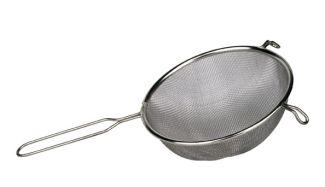
Sieve is pronounced "siv". 
It rhymes with give.


Bonus point:
The one for pasta is called a colander.
 
 
Incorrect:
It's not pronounced "see-v", and the other one is not a noodle sieve.

07 July 2014

therefore and therefor

This Denglish mistake is the most problematic and persistent mistake I have had to deal with during my time correcting German-English texts. "Therefore/therefore" is very frequently used incorrectly by German speakers, and it seems to be difficult to remember the correct words to use.

There is only one correct way to use "therefore".


Therefore:

"Therefore" is the best friend of "because" and should be used when the two clauses of a "because" sentence are flipped around.

Example: 

He was unable to play football because he was injured.

He was injured, therefore he was unable to play football.


Rule: If you can't flip it to make a "because" sentence, don't use "therefore".


Therefor:

This word is not used in modern English. Modern spell checkers will underline this as a mistake. Don't use it. 


Origin of the confusion:


For example, you want to say:  

Ziel des Projektes war, herauszufinden ob Coca Cola und Pepsi in Blindversuchen von einander unterschieden werden können. Dafür wurden 200 Versuchspersonen unbeschriftete Becher mit Coca Cola oder Pepsi gegeben.

The correct English translation is:

The aim of this project was to find out if Coca Cola and Pepsi could be correctly identified in blind trials. To do this, 200 test subjects were given unlabelled cups containing either Coca Cola or Pepsi.

Other correct options: 

...identified in blind trials. To this aim, 200 test subjects...
...identified in blind trials. To investigate this, 200 test subjects...
...identified in blind trials. This was done by giving 200 test subjects...
...identified in blind trials. In this study, 200 test subjects...

...and many more. 

Or nothing:

...identified in blind trials. Two hundred test subjects were...

This abstract is a good example of the correct use of "therefore" and "to do this". http://www.nature.com/nature/journal/v267/n5608/abs/267281a0.html


Still not convinced?
Many people simply don't believe me. Look up "to do this" (with quotation marks " ") on Google Scholar and note how often it is used in this context by American/Canadian/British/Irish/Australian authors. You will not find a paper by a native English speaker that uses "therefore/therefor" to mean "dafür", only papers by other non-native speakers. 

But google told me...
If you google "therefor" and "dafür" you will get some google hits. In Shakespeare's works you can find "therefor" used for this purpose, but it is not used like this in modern English. Unless you are writing in Shakespearean English, do not use it.

Incorrect:
"thus" is also wrong and very old fashioned.

04 April 2014

protocol

A protocol is a kind of set of rules. 

In science, a protocol is another word for a set of instructions for an experiment, like a standard operating procedure (SOP).

In polite society, protocol means etiquette, like eating with a knife and fork in the correct hands, holding the door open for someone, etc.

In politics, protocol means a book of agreed guidelines, like the Kyoto Protocol.

Not a protocol:

The thing you write after a meeting is called "minutes".

For example:

"Who's taking down the minutes of this meeting? Please e-mail a copy of the minutes to everyone."


Origin of the confusion: 
In German, the minutes of a meeting are called "das Protokoll". The word "protocol" was used in the past in English to mean minutes, but the modern term is "minutes".

Acronyms and abbreviations

An acronym is a series of letters that stand for words. For example, PCR is an acronym that stands for polymerase chain reaction.

The most important thing is: always define an acronym before you use it. If you define it in the abstract of a scientific text, you need to define it again in the introduction.


Acronyms are a complex subject!


My advice: use acronyms made of capital letters without dots in between, like DNA, DVD, BBC, etc.

When you define an acronym from normal words, do not use capital letters at the start of the full words

For example:

The process of anaerobic digestion (AD) is used to make biogas.


When you define an acronym from a proper noun (name, etc), use capital letters. 

For example:

The World Health Organisation (WHO) recommends vaccinating children against polio.

Don't use small letters or dots in between.

Some exceptions:

One exception is certain biological words like mRNA. Another exception is acronyms that are not made of the just the first letter of a word (Interpol, International Criminal Police Organization).

Plurals:

When you use a plural, use a small "s" without an apostrophe.

For example:

Two CDs
Three DVDs

For unusual acronyms, specific styles, and other information, see the ridiculously long Wikipedia article on this topic.


History:

British English used to be very logical. If it was the 'British Broadcasting Company' it was abbreviated as 'B.B.C.' and if it was 'missing in action' it was 'm.i.a.'.  Big letter acronyms for big letter words, small letter acronyms for small letter words, and dots in between to make it clear it was an acronym.

Then the Americans decided that it would be easier to write these acronyms without all those annoying dots, making BBC and mia. But "mia" doesn't look like an acronym, it looks like a word, so they changed small-letter acronyms to big-letter acronyms to clearly show that they were acronyms. The British gradually agreed that this was more convenient and they started doing it too. That's why MIA is the acronym for 'missing in action', even though the original words have small letters.

21 January 2014

thereby/hereby

My advice: don't use the words "thereby" or "hereby".

The word "hereby" means "here in this document", and is typically only used in legal statements in the phrase "I hereby declare..."

For example:

I hereby declare that I, John Smith, agree to to terms of this contract.
I hereby declare that Bob Jones worked in my company from January to October 2010.


The world "thereby" means "doing that made something happen".

For example:

She dropped her cup on the floor, thereby causing a disruption to the classroom.

http://simple.wiktionary.org/wiki/thereby


Origin of the confusion:

In German there are two words, "hierdurch"/"hierbei" and "dadurch"/"dabei" that are very similar to "hereby" and "thereby". One big difference is that "hereby" is not used outside of legal documents. The other big difference is that "thereby" can not be used at the start of a sentence, and that you need a comma before and an -ing verb after "thereby" (see examples above).


Here is the correct way to translate "hierbei"/"hierdurch"/"dadurch"/"dabei"

Prozess X ist blabla und ist ein wichtiger Teil von Y. Hierbei wird ABC gebildet und bla bla.
This would be translated as :
Process X is blah blah and is an important part of Y. During this process, ABC is formed and blah blah...  or
Process X is blah blah and is an important part of Y. ABC is formed during this process and blah blah...

Prozess X ist blabla und steigert den Y-Wert. Dadurch wird weniger ABC gebildet...
This would be translated as:
Process X is blah blah and increased the y value. This means that less ABC is formed...

12 November 2013

Hyphenate between a word and a prefix if you want and if it looks better

Never use a space for prefixes. You can hyphenate prefixes all the time if you want to. Some words are hard to read without hyphens, particularly when there are two vowels next to each other. In these cases you should always use a prefix.

Examples:

pre-historic or prehistoric
pre-diabetes or prediabetes

pre-existence (preexistance looks strange)
pre-industrial (preindustrial looks strange)

Don't hyphenate two nouns that belong together

In English, two words that belong together are not usually separated with a hyphen, they are separated with a space.

Examples: 

a tablet computer
the hospital food
a mobile phone or a cell phone
the biogas process


If the word really takes on a new meaning, it is often joined together as one word.

Examples:

smartphone or smart phone


Origin of the confusion:

In German, it used to be easy. Two nouns that belonged together would be stuck together. Donaudampfschiff. Now things are changing, and people are starting to use hyphens instead of putting words together, to give Donau-Dampf-Schiff. People think this comes from English, but you don't do this in English! It would be a Danube steamboat (a Danube-steam boat would be a boat that uses steam from the Danube, and a Danube steam-boat is just wrong).


P.S. There are always exceptions

Hyphenate compound modifiers before nouns

In British English, all compound adjectives should be hyphenated.

Example: 

a well-written article
nitrogen-fixing bacteria


In American English, it's not as important unless there is a loss of meaning without a hyphen.

Example:

a small-appliance company (company that sells small appliances)
a small appliance company (small company that sells appliances)


If it's not before a noun, it usually isn't hyphenated.

Example:

The advanced-physics teacher teaches advanced physics.

The text was very well written.


This website is quite useful.